
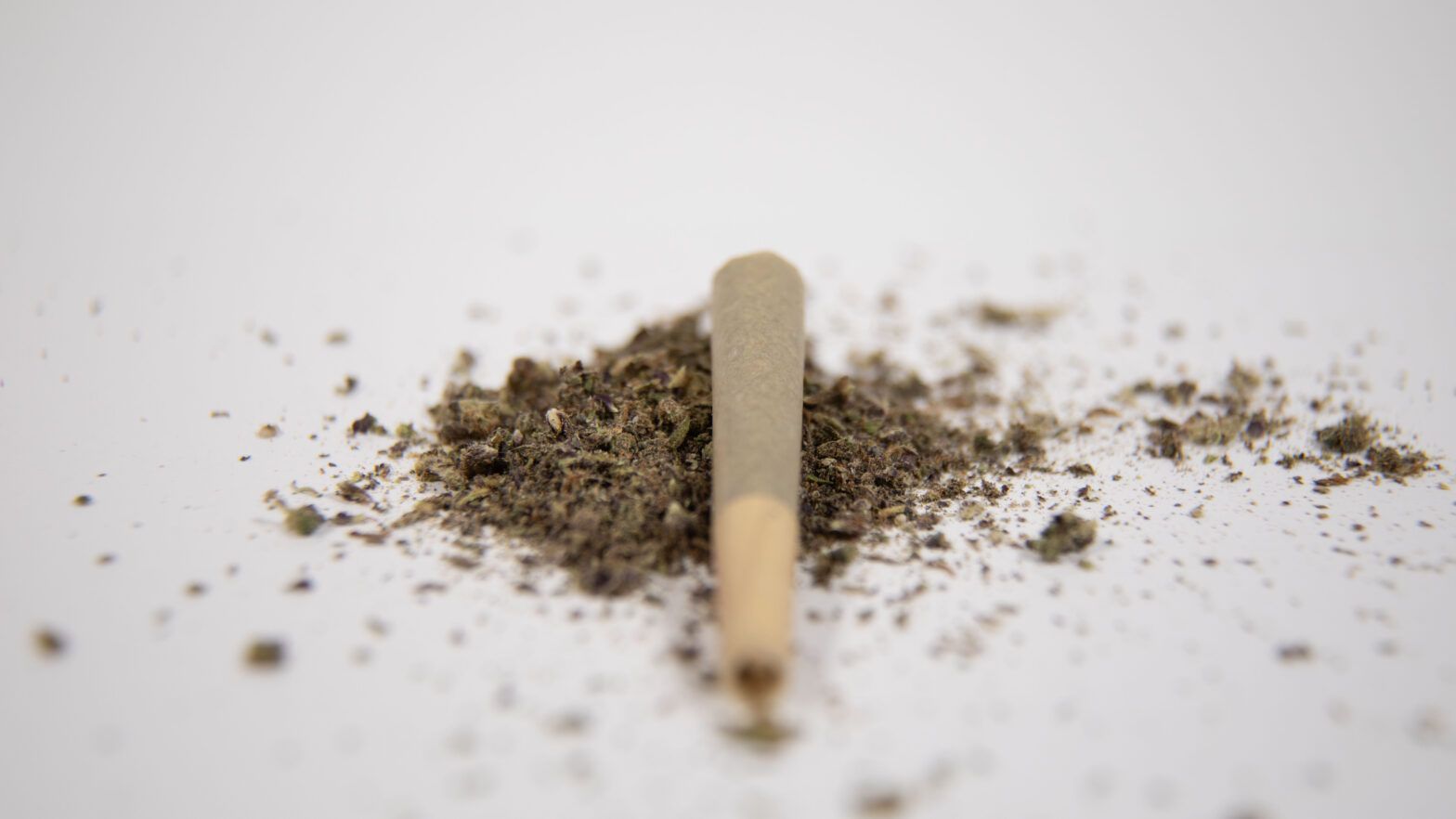
For years, people have said water bongs “filter out the bad stuff,” making cannabis smoke smoother and safer. In 2025, a new laboratory analysis challenged that idea—finding little chemical difference between smoke drawn through bong water and smoke from a standard joint, at least for the range of molecules the team measured. At the same time, earlier research on waterpipes (and work on cannabis smoke toxicants generally) helps explain which harmful compounds we’re talking about—and why simply bubbling smoke through water is unlikely to remove them in a meaningful way. READ MORE: Marijuana Moment
The 2025 lab finding: Bong water didn’t remove the measured compounds
A preprint from a University of Wisconsin–Madison–affiliated team (with collaborators in Thailand) used gas chromatography–mass spectrometry (GC-MS) to compare chemical profiles of smoke from three cannabis strains consumed via joint vs. bong. In short: “GC-MS results from both the bong and joint smoke show similar smoke composition. No compounds between 5 to 350 g/mol were completely filtered by the bong water.” The authors concluded that—within that molecular weight window—bong water did not significantly filter out the compounds they detected. SEE THE DATA HERE: BioRxiv
A news summary of the work emphasized the same point, while also noting a key limitation (see below): bong water may still trap larger aerosol particles or metals that GC-MS in this setup didn’t capture, so the finding is not proof that bongs remove nothing, only that among the measured species there was little difference.
Transparency note: Shortly after posting, the authors withdrew the preprint, citing a “conflicting bureaucracy issue” related to where the research was performed. The withdrawal does not, by itself, refute the data—but it does mean readers should treat the specific results as provisional until a peer-reviewed version appears.
But wait—older studies also question water-pipe “filtration”
This isn’t the first time research has thrown cold water on bong-as-filter claims. In the early 2000s, a MAPS/NORML study comparing tar-to-cannabinoid ratios found that waterpipes performed worse than unfiltered joints, with a bong delivering about 30% more tar per unit of cannabinoids—suggesting water may remove more THC relative to tar, prompting people to take more smoke to achieve a desired effect. READ MORE ABOUT: MAPS
An earlier MAPS review had suggested water can remove some water-soluble toxicants, and that effectiveness depends on contact area/time—but it never claimed bongs eliminate risk. Later work on secondhand bong smoke found room air PM2.5 (fine particulate matter) surges to hazardous levels during bong sessions, underscoring that fine particles (a major harm driver) pass right through and accumulate in indoor air.
So what are the “harmful compounds” at issue?
Even when cannabis is the only plant being burned, combustion creates a familiar toxicant cocktail:
- Fine particulate matter (PM2.5) – drives cardiopulmonary risk; remains abundant in water-pipe environments and is not effectively removed by bubbling.
- Polycyclic aromatic hydrocarbons (PAHs) – a class of combustion-generated compounds with carcinogenic members; measurable in cannabis users’ biomonitoring studies. READ MORE HERE: PMC
- Volatile organic compounds (VOCs) – numerous irritants and toxicants; indoor cannabis smoking and vaping release VOCs that can transform into secondary pollutants.
- Carbon monoxide (CO) – a marker of combustion exposure; waterpipe studies in tobacco show CO can be higher than a cigarette session, highlighting the limits of water contact. (Direct cannabis-waterpipe CO data are rarer, but the mechanism—smoldering, charcoal in hookahs, incomplete combustion—illustrates why cooling ≠ detoxifying.)
- Ammonia and other gases – some analyses report higher ammonia in cannabis smoke than in tobacco smoke under similar conditions, adding to respiratory irritant burden.
The 2025 GC-MS study doesn’t isolate each toxicant’s health effect; rather, it shows that passing smoke through water didn’t make the measured chemical profile look “cleaner.” In toxicology terms, the dose of harmful stuff likely doesn’t drop enough to claim a protective effect—especially for particles (a major driver of risk) that water bubbling often fails to capture.
What the 2025 analysis didn’t (and can’t) prove
It’s crucial to understand measurement limits:
- Analytical window. The reported GC-MS range (≈5–350 g/mol) misses larger aerosol particles/aggregates and some metals or mineral ash. The authors explicitly note this; it remains plausible that water could reduce some larger, water-soluble fractions—just not enough to change the overall risk picture.
- Preprint status and withdrawal. Because the manuscript was withdrawn (pending bureaucratic issues) and not yet peer-reviewed, conclusions should be treated cautiously. Still, the data align with a body of earlier findings: waterpipes are not reliable detox devices.
- User behavior. People titrate dose. If a bong removes more THC than tar (as an older study suggested), users might take bigger/extra hits—paradoxically increasing exposure to tar and CO to achieve the same effect.
Bottom line from the evidence
- Cooling ≠ filtering. Water bongs cool and humidify smoke, which can feel smoother—but that sensation does not mean the smoke is free of irritants or toxicants. The 2025 analysis found no meaningful removal of measured compounds, and earlier research shows fine particles, tar, PAHs, VOCs and CO remain substantial.
- Secondhand exposure is real. Indoor bong sessions can raise PM2.5 to hazardous levels for everyone in the room—even if the smoke feels “soft.”
- Harm reduction needs different tools. If reducing combustion byproducts is the goal, non-combustion routes (e.g., tested vaporizers operated at appropriate temperatures) or non-inhaled formulations avoid most smoke toxicants—though each has its own risk/benefit and regulatory considerations. (This article focuses on bongs; check device-specific data when comparing methods.)
Practical takeaways (for people who choose to smoke anyway)
While the safest option is to avoid smoke, if you’re going to use a bong:
- Ventilation matters. Use outdoor settings or strong ventilation to limit PM2.5 buildup for you and bystanders.
- Clean the bong frequently. Stagnant water can harbor microbes and won’t “filter” tar once saturated. (This is common sense/hygiene; the chemical findings above still apply.)
- Avoid deep/rapid chains of hits. “Smoother” hits can disguise harshness and encourage larger inhalations—raising total particulate exposure.
- Know that water color isn’t a safety gauge. Brown water simply shows some water-soluble gunk was captured; fine particles, gases, and many toxicants still pass through.
The evolving science
Cannabis smoke research is accelerating: studies measuring indoor VOCs, secondary pollutants, and toxicant biomarkers are filling gaps that older device comparisons left open. Expect more nuanced findings about which compounds are reduced (or not) by specific devices and under real-world use patterns. For now, the weight of evidence says don’t mistake cooler, wetter smoke for “filtered” smoke—a bong is not a reliable toxicant filter.